Why People See Double: The Psychology and Science Behind Celebrity Resemblances
Across cultures and decades, people notice striking similarities between unrelated faces. That sensation is driven by a mix of perceptual bias, cultural priming, and shared facial geometry. Humans naturally look for patterns; when key features—eye spacing, nose shape, jawline, or even the way someone smiles—align with a well-known public figure, the brain flags a match. This is why phrases like looks like a celebrity and celebrity look alike regularly trend on social media and in casual conversation.
Social and cultural forces amplify these comparisons. Celebrities populate media feeds constantly, so their faces become reference templates. When people encounter a new face, the mind quickly searches that internal library for the closest match. Lighting, hair color, makeup, and styling further influence perceived resemblance; a haircut or wardrobe similar to a star’s iconic look can strengthen the impression of likeness.
Perceptual psychology also explains why multiple celebrities can look similar to each other. Many facial features fall into a limited set of stable variations across populations. Combinations of these features produce repeating face archetypes—classical examples are the “heart-shaped” face, the “square jaw,” or the high-cheekbone look. When two celebrities share those archetypal coordinates, people call them doppelgängers.
Social reactions matter too. Being told “you look like a celebrity” carries social currency: it can flatter, make someone feel more recognizable, or simply entertain. Platforms and apps now tap into that desire for comparison, turning a casual observation into a shareable moment. For those wondering what famous face they resemble, tools that identify which celebs i look like are widely used to satisfy curiosity and spark conversations.
How Celebrity Look Alike Matching Works
Modern celebrity look-alike matching relies on advanced face recognition and machine learning. The process begins with face detection: the system locates a face within an uploaded image, crops it, and normalizes scale, rotation, and lighting so the face aligns to a standard template. This alignment reduces distortions from head tilt or uneven lighting that would otherwise skew comparisons.
Next comes feature extraction. Deep convolutional neural networks convert visual information into numerical vectors—compact representations of facial geometry, texture, and relative feature positions. These embeddings capture subtle distinctions beyond simple measurements, encoding patterns such as the curve of an eyebrow or the spacing between the eyes. Each celebrity in the database has a precomputed embedding, too, creating a searchable space of faces.
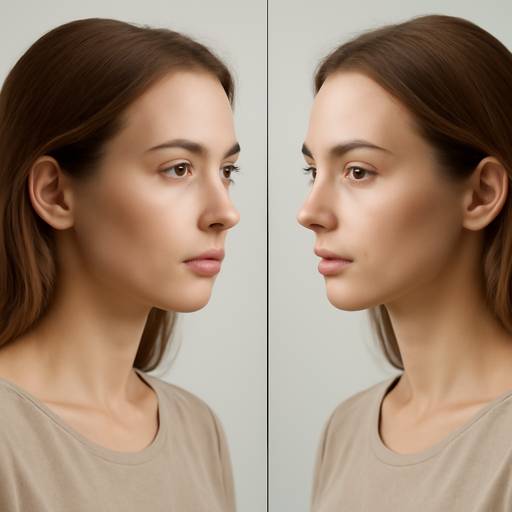
Similarity comparison involves measuring distances between embeddings. Algorithms calculate how close a user’s face vector is to each celebrity vector using metrics like cosine similarity or Euclidean distance. Results are ranked by closeness and often accompanied by a confidence score. Systems apply thresholds to avoid false positives, and some offer multiple matches when similarities cluster across a few celebrities.
Robust platforms incorporate quality controls: they handle multiple angles with pose-robust models, reduce bias by diversifying training sets, and use metadata (age, gender, ethnicity) only to refine results when ethically appropriate. Privacy practices are critical—responsible services delete images after processing or keep data encrypted and user-controlled. Understanding the pipeline clarifies why matches can sometimes surprise: lighting, expression, and styling can change embeddings enough to favor one celebrity over another, explaining the occasional unexpected “celebrity look alike” result.
Real-World Examples and Case Studies: Famous Look-Alikes and What They Teach Us
High-profile look-alikes provide practical insight into how facial resemblance operates in real life. Consider comparisons that frequently circulate: Natalie Portman and Keira Knightley are often noted for similar facial proportions and delicate features, while Isla Fisher and Amy Adams are commonly mistaken for one another due to red hair, similar smiles, and comparable face shapes. These pairings highlight how a few shared attributes can dominate perception.
Celebrity look-alike campaigns have been used in marketing and entertainment to generate buzz. Casting directors sometimes seek actors who resemble historical figures or well-known personalities to enhance authenticity in biopics. Social media has amplified everyday cases: users post side-by-side photos that rack up millions of views, showing how crowdsourced comparison can make a look-alike viral phenomenon.
One illustrative case study involved a public campaign where volunteers uploaded selfies to test a matching engine. The system returned a top match for each user and provided a secondary list of similar celebrities. Analysis showed patterns: matches skewed toward celebrities with broad media exposure, and users tended to accept matches when the celebrity shared a prominent single feature—such as eyes or jawline—even when the overall resemblance was modest. This underscores how human attention to salient features can outweigh holistic facial similarity in perceived matches.
Real-world examples also reveal platform limitations. Race, age, and non-neutral expressions can reduce accuracy, and fashion choices often sway public perception more than underlying bone structure. Still, these examples demonstrate how the combination of machine intelligence and human psychology creates compelling, sometimes uncanny resemblances. For anyone curious to explore their own famous counterpart, a quick check with a trusted tool that finds look alikes of famous people can be an entertaining way to learn which public faces echo your features and why those matches occur.

A Kazakh software architect relocated to Tallinn, Estonia. Timur blogs in concise bursts—think “micro-essays”—on cyber-security, minimalist travel, and Central Asian folklore. He plays classical guitar and rides a foldable bike through Baltic winds.